
In the mountains of the Kurdistan Region, the Yazidi Festival unfolds as a deeply spiritual gathering rather than a staged event. Sacred fires are lit, ancient hymns are sung, and families come together to honor traditions that have survived for centuries. At the heart of this experience is Lalish, the holiest site in Yazidism, where every ritual carries meaning and history.
For travelers, this is not about watching from a distance. There are no performances or curated moments, only real life as it happens. Visiting during the festival offers a rare chance to witness an authentic culture, where you’re not just an observer but a respectful guest in a living tradition.
What Is the Yazidi Festival in Kurdistan?
The Yazidis are one of the world’s oldest and often misunderstood religious communities. Their beliefs are unique, shaped by a mix of ancient Mesopotamian traditions, along with influences from Zoroastrianism and Sufi Islam, yet they remain completely distinct from all of them. They believe in one God and hold Melek Taus, the Peacock Angel, as a sacred figure. Over time, this belief has been misunderstood by outsiders, which has sadly led to long periods of persecution.
At the center of their spiritual life are their festivals, especially the annual pilgrimage to Lalish, the most sacred place for Yazidis. Hidden in a peaceful green valley in northern Iraq, Lalish is more than just a location, it is a place of deep meaning, identity, and connection.
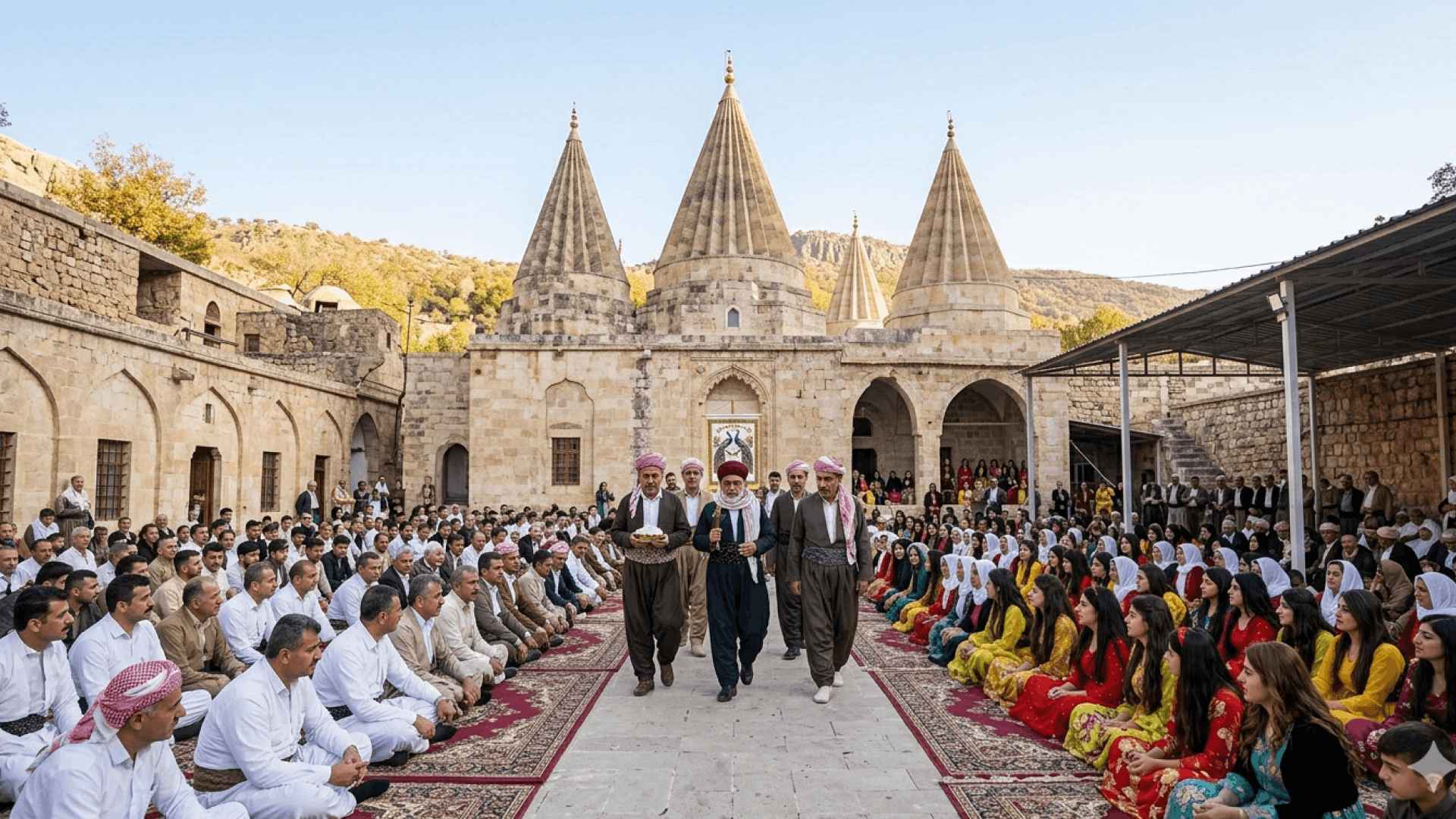
These gatherings are not staged events for visitors. They are real, living traditions, moments when a community that has faced hardship comes together to reconnect with its faith and with one another. The fact that travelers can now respectfully witness parts of this experience through guided tours is what makes it truly rare and meaningful.
Where and When the Festival Takes Place
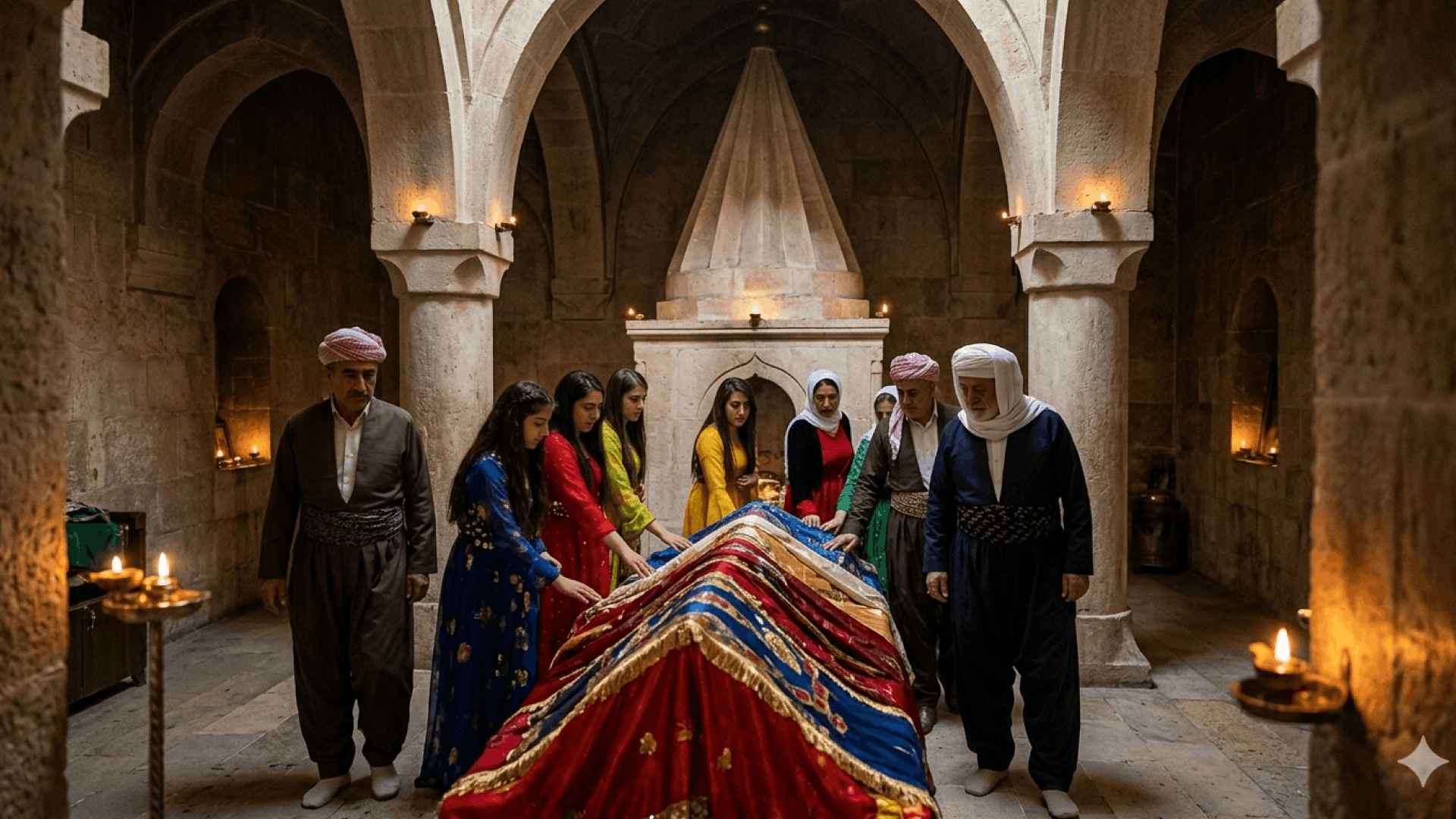
The spiritual heart of Yazidism is Lalish, a sacred valley sanctuary in the Kurdistan Region of Iraq, about 55 kilometers northeast of Mosul. Historically, non-Yazidis were not allowed to enter. Today, visitors can access the site, but only by following strict protocols of respect (shoes must be removed before entering), and some areas remain off-limits.
The most important annual gathering is Çarşema Sor (Red Wednesday), the Yazidi New Year, celebrated in mid-April according to the solar calendar. Families decorate their homes with flowers, light candles and bonfires, and gather at Lalish for prayer, music, and communal feasting.
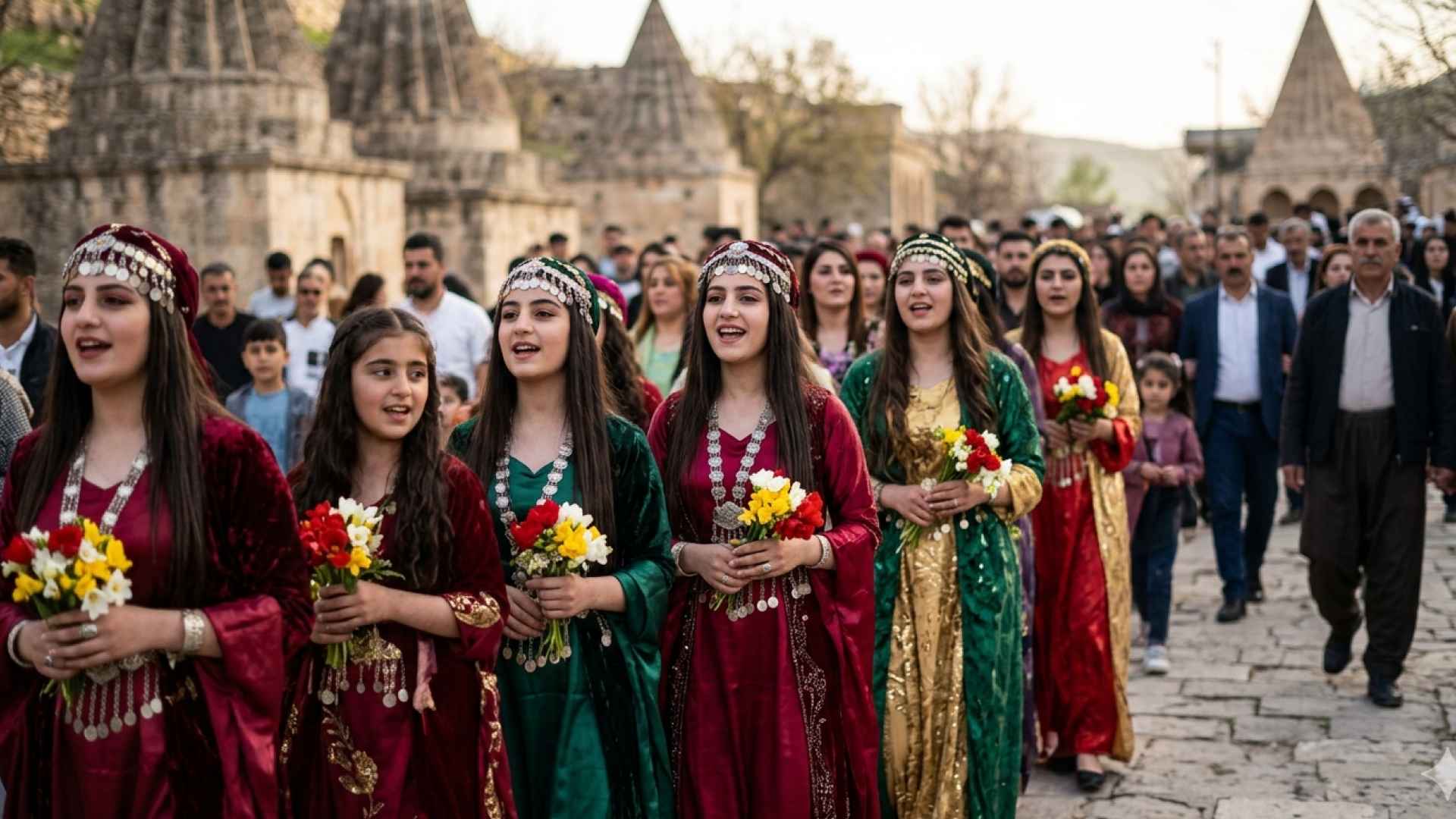
Another major pilgrimage is the Feast of the Assembly (Cejna Cemaiya), held in autumn. This seven-day festival attracts Yazidis from around the world for intensive rituals, strengthening both spiritual and community bonds.
What Makes This Festival Tour Unique?
This festival is entirely authentic, with no staged performances. In the Kurdistan Region, you witness real traditions and respectfully experience a deeply rooted, living culture.
Authentic Cultural Immersion
We often hear the term “authentic cultural immersion,” but this is one of the rare times it genuinely feels true. You're not watching a folk dance performed for cameras. You're sitting in a courtyard where the same songs have been sung for over a thousand years, sung by people for whom these songs are oxygen, not performance.
Guided tours of the Yazidi festival typically include access to community elders who speak directly about their theology and history, a form of cultural exchange that requires genuine openness on the traveler's part.
Spiritual and Community Experience
There's a specific quality of atmosphere at Lalish that travelers consistently struggle to articulate. The Yazidi community, having survived centuries of persecution, carries a remarkable collective warmth. Guests are not merely tolerated, they are welcomed with a kind of joy that feels somehow both deliberate and completely natural.
Hospitality and Local Interaction
Hospitality is not a selling point, it's a value system. In Yazidi culture, welcoming a stranger is considered a sacred act. You will be offered food you didn't ask for, shown places you didn't know to ask about, and treated with a kind of uncomplicated generosity that modern travelers, accustomed to transactions, find slightly disorienting at first.
Go with it, let yourself be hosted. The discomfort of not knowing how to reciprocate is the experience itself.
What Can Travelers Expect on the Tour?
Visitors experience the heart of Yazidi culture through sacred rituals, traditional Qawwal music, and guided walks of the Lalish sanctuary. They can share communal meals with local families, interact with community members, and visit key spiritual sites like the holy spring and Sheikh Adi’s tomb, offering a rare glimpse into an ancient, living tradition.
Scenic and Cultural Highlights
Kurdistan is truly stunning, just imagine driving to Lalish, passing rocky hills one moment and green, peaceful valleys the next. The sanctuary there is unlike anything you’ve seen, tall pointed towers and cool stone rooms decorated with cloth make it feel magical.
Tours often include nearby towns like Duhok, Amadiya (a city on top of a mountain), and old Assyrian villages in Nahla Valley. Visiting these places gives you a real sense of the region, letting you connect with the place in a way that stays with you long after the trip.
Is Kurdistan Safe for Travelers?
Safety is often the first question travelers ask, and Kurdistan has a surprisingly positive answer.
Tourist Safety Experiences
- The Kurdistan Region of Iraq is more stable than other parts of the country.
- It has its own government and security forces called the Peshmerga.
- Erbil, the capital, has an international airport and modern hotels.
- Tourism is growing in the region.
- Most travelers feel it is safer than they expected.
- Following travel advisories and using basic precautions helps ensure a safe trip.
Importance of Guided Tours
- Taking a guided tour here is highly recommended.
- Local guides help you understand cultural rules and traditions.
- They advise what you can and cannot photograph.
- Guides help you connect with local people for a better experience.
- They manage travel plans in areas where facilities may be underdeveloped.
Conclusion
The Yazidi Festival tour isn’t a typical getaway focused on perfect photos, but an experience that stays with you. With genuine curiosity and respect, it places you among one of the world’s most fascinating, resilient, and generous communities at a moment when they are truly themselves. Experiences like this are increasingly rare. Many cultural traditions are being commercialized or lost, yet the Yazidi festival remains authentic and accessible to visitors, for now. If you’re planning a trip to Kurdistan, platforms like Zaair can help you find guided tours that ensure a meaningful, respectful, and immersive experience, opening the door to Iraq’s most unmediated cultural encounters.
FAQs
What is the Yazidi Festival?
An authentic, centuries-old religious gathering in Lalish, offering a rare glimpse into Yazidi culture and traditions.
When is the best time to visit for the Yazidi festival?
Mid-April (Yazidi New Year) for a festive vibe, or late September- early October (Feast of the Assembly) for a larger, more spiritual pilgrimage.
Is Kurdistan safe for travelers?
Yes, the region is stable with its own government and security forces. Travelers should stay updated on advisories
Why take a guided tour?
Guides help with cultural protocols and meaningful interactions, making the experience immersive and respectful.
What can you experience at the Yazidi festival?
You can witness sacred rituals, listen to traditional Qawwal music, explore Lalish, share meals with local families, and visit deeply meaningful spiritual sites.
What are the nearest attractions in Kurdistan?
Yes, tours often include scenic Kurdish towns like Duhok, Amadiya, and historic villages in the Nahla Valley.