


Wadi Al Salaam, one of the world’s largest cemeteries, is a burial ground unlike any other. It lies in the holy city of Najaf in Iraq. People have been buried here for more than 1,400 years. Scholars, leaders, pilgrims, and everyday believers rest side by side. The name Wadi Al Salaam means Valley of Peace. Despite this calm meaning, the site has seen deep devotion and periods of conflict. With millions of graves spread across land the size of a small city, the history behind Wadi Al Salaam reflects faith, memory, and human continuity.
How Wadi Al Salaam Became the World’s Largest Cemetery
Its unmatched size comes from centuries of continuous burials, religious importance, and global pilgrimage, making it a sacred resting place for millions across generations.
The Name and Location
Wadi Al Salaam means Valley of Peace. It sits on the outskirts of Najaf, one of the holiest cities in Shia Islam, in central Iraq. This ancient Islamic cemetery holds the record as the world’s largest cemetery. It covers hundreds of hectares and contains millions of graves. Its closeness to the Imam Ali Shrine, the burial place of Ali ibn Abi Talib, explains its lasting importance.
Why It’s Recognized Globally
No other burial ground matches its scale. Guinness World Records confirms Wadi Al Salaam has been in continuous use since at least the seventh century. This makes it both one of the oldest and largest cemeteries in human history.
Origins and Early History
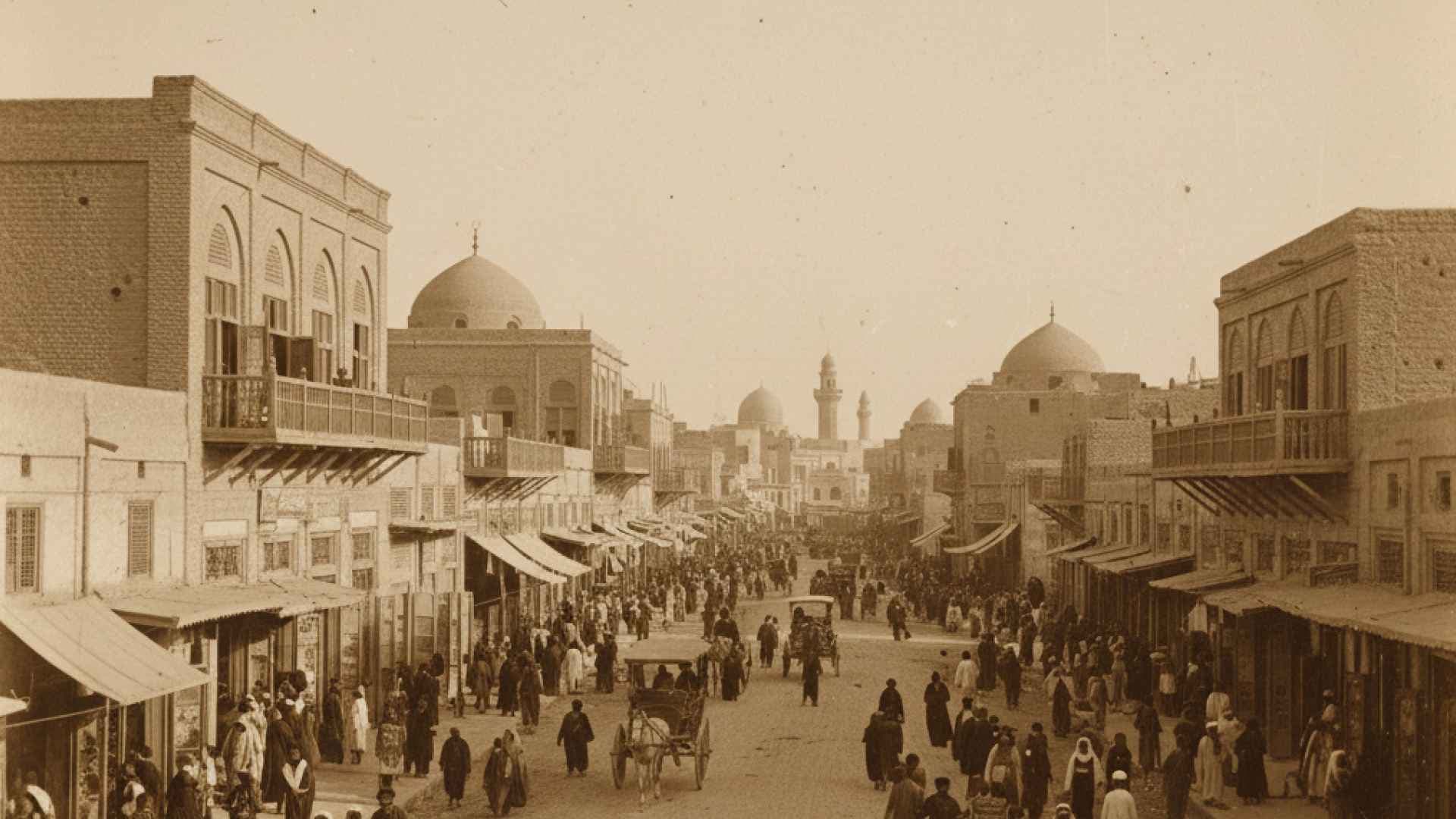
Wadi Al Salaem has a history that began after the assassination of Imam Ali in 661 CE. He was killed in nearby Kufa and he was buried in Najaf. Since that time, the region has developed a profound spiritual significance. There were many believers who thought that they could get a spiritual advantage by being buried close to Imam Ali. When this faith spread, even residents of the far parts of the land started to seek to be buried in the location. Unlike many ancient cemeteries that eventually fell out of use, Wadi Al Salaam continued to grow. It has been active for over 1,400 years. The cemetery has gone through the early Islamic, Abbasid era, and modern history. Its continuous use reflects strong religious and cultural attachment rather than geography alone.
Religious Significance and Beliefs
Faith plays a central role here, shaping burial choices through beliefs about resurrection, divine mercy, and spiritual closeness to revered Islamic figures.
Being Buried Close to Imam Ali
For Shia Muslims, burial in Wadi Al Salaam holds deep meaning. Many believe resting near Imam Ali’s tomb brings closeness to paradise. Tradition holds that those buried nearby may rise earlier on Judgment Day. This belief makes the cemetery a symbol of hope and mercy.
A Pilgrimage Destination
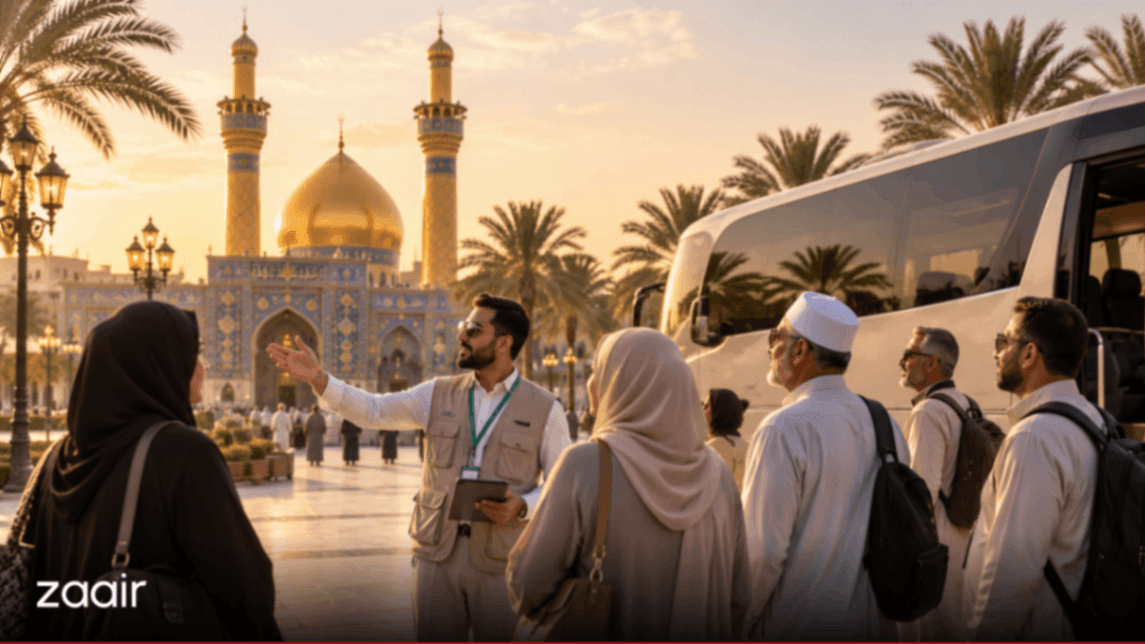
For centuries, pilgrims and mourners have traveled to Wadi Al Salaam. Visitors come not only from Iraq but also from Iran, Pakistan, and other Shia communities. Many families arrange burials here, believing it supports the soul’s journey after death.
Scale and Structure of the Cemetery
Its vast layout reflects centuries of growth, forming a dense landscape of graves, tombs, and mausoleums shaped by time and tradition.
A City of the Dead
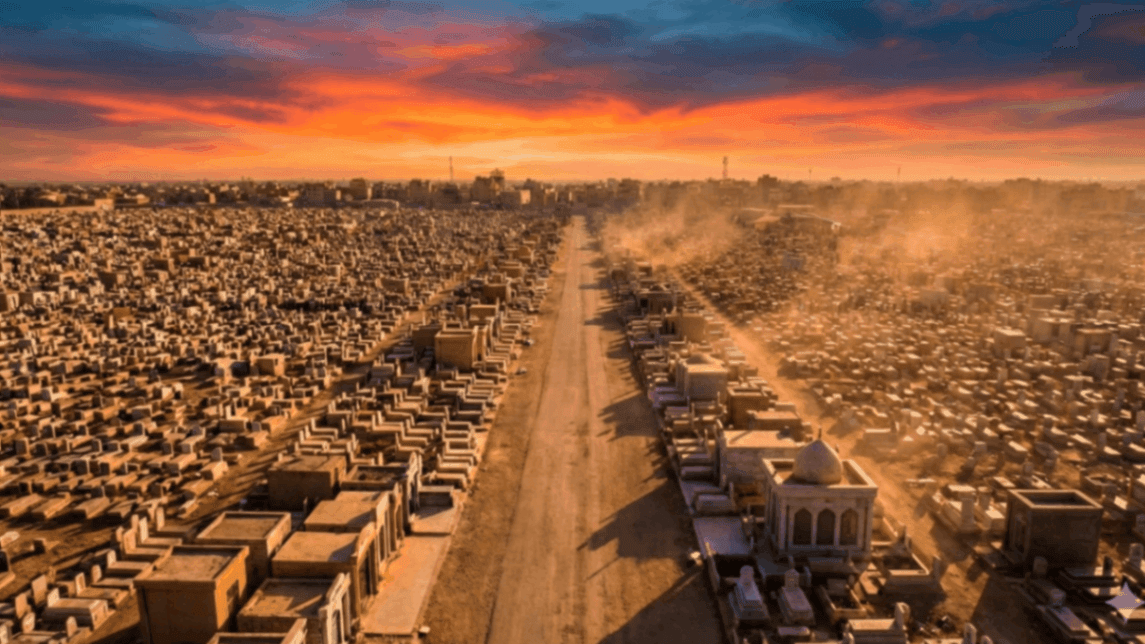
Covering roughly 900 to 1,000 hectares, the world’s largest cemetery looks like a city from above. Graves sit close together. Tombs vary by era and wealth. Some are simple earth graves. Others feature domes and carved inscriptions.
Millions of Graves
Estimates suggest more than five million people are buried here. Some reports place the number closer to six million. Continuous burials over centuries explain this scale and depth.
How the Cemetery Expanded Over Time
Improved travel, regional conflicts, and population growth steadily expanded the cemetery, turning it into a global burial site for Shia Muslims.
- Early burials were mostly limited to residents of Najaf and nearby towns.
- Poor roads and long travel times made distant burials difficult in earlier centuries.
- Gradual improvements in trade routes increased access to Najaf.
- Pilgrims traveling for religious purposes began arranging burials alongside visits.
- Families from Iran increasingly sent their deceased for burial near Imam Ali.
- Shia communities in Pakistan also adopted this practice over time.
- Gulf regions contributed to burial growth as religious travel became easier.
These changes slowly transformed Wadi Al Salaam from a local cemetery into one of global religious importance.
If you want to know where to visit in Karbala, read: Which Hidden Gems and Historic Landmarks Should You Visit in Karbala
Wadi Al Salaam in Times of Conflict
Wadi Al Salaam has never been a silent and mournful place. At times, modern conflict has reached even this sacred ground. During the 2004 Battle of Najaf, the cemetery became an unexpected part of the fighting between U.S. forces and armed militia. Its vast layout, narrow pathways, and dense clusters of tombs provided natural cover. The fighters traveled across the graves and defended themselves using mausoleums and catacombs.
The scale of the cemetery made it difficult to control and turned it into a complex battlefield rather than a traditional open space. This situation highlighted how places of deep religious meaning can become entangled in political and military struggles. Despite this disruption, Wadi Al Salaam never lost its spiritual identity. Burials continued even during periods of unrest, and pilgrims still visited to pray and remember the dead. The cemetery remained a symbol of faith, endurance, and continuity, standing in contrast to the violence that temporarily surrounded it.
Modern Recognition and Preservation
Global recognition highlights the cemetery’s importance as both a sacred site and a historical landmark requiring long-term care and respect.
Guinness World Records and UNESCO
Guinness World Records lists Wadi Al Salaam as the largest cemetery on Earth. It also appears on UNESCO’s Tentative List for World Heritage status, recognizing its cultural value.
Burial Practices Today
Burials still occur daily and practices range from simple graves to family crypts. While land availability and costs have changed, the desire to be buried here remains strong among Shia Muslims worldwide.
Wadi Al Salaam’s Place in Global History
Beyond its religious importance, Wadi Al Salaam stands as a long historical record of human movement, belief, conflict, and continuity. For more than a thousand years, people from different regions have chosen this land as their final resting place, leaving behind a silent map of migration and shared faith. Ancient scholars, leaders, and ordinary believers lie alongside modern pilgrims, showing how devotion has endured across generations.
The cemetery represents centuries of unified faith and spiritual unity. It connects the past with the present, uniting people separated by time and geography through a shared reverence for the site. Considering that it is the largest cemetery in the world, it is more than a burial ground. It holds cultural memory and describes how humanity is deeply connected with life, death and faith. Its vast scale stands as a reminder of the continuity, memory and the undying strength of faith.
Conclusion
The largest cemetery in the world, Wadi Al Salaam is still one of the most significant spiritual and historical landscapes on the planet. From its origins beside the burial place of Imam Ali to its recognition by Guinness World Records and UNESCO, the history behind Wadi Al Salaam reflects centuries of faith, continuity, and cultural devotion. Generations of believers have chosen this sacred ground as their final resting place, creating a living record of belief and remembrance. The cemetery is studied in terms of religion, history or culture and it prompts silent contemplation of life, death and human heritage. Its story is still being felt in the holy soil of Najaf. Zaair provides travel services that include Wadi Al Salaam cemetery along with other ziyarat sites of Najaf.
FAQs
Why is Wadi Al‑Salaam considered the world’s largest cemetery?
Wadi Al‑Salaam holds this title because it covers a huge area (over 900 hectares) and contains millions of graves far more than any other burial ground in history.
How old is Wadi Al‑Salaam?
The cemetery has been in continuous use for more than 1,400 years, dating back to the time shortly after Imam Ali’s death.
Who is buried in Wadi Al‑Salaam?
Besides ordinary believers, scholars, martyrs, and pilgrims, many historic figures rulers, scholars, and even prophets according to tradition are said to be interred there.
Why do people want to be buried here?
In Shia Islamic belief, burial in Wadi Al‑Salaam near Imam Ali may offer spiritual benefits and intercession on Judgment Day, making it a deeply desired resting place
Can people from outside Iraq be buried in Wadi Al‑Salaam?
Yes, Shia Muslims from other countries, including Iran, Pakistan, and the Gulf regions, often arrange burials here to be near Imam Ali, reflecting the cemetery’s international significance.