


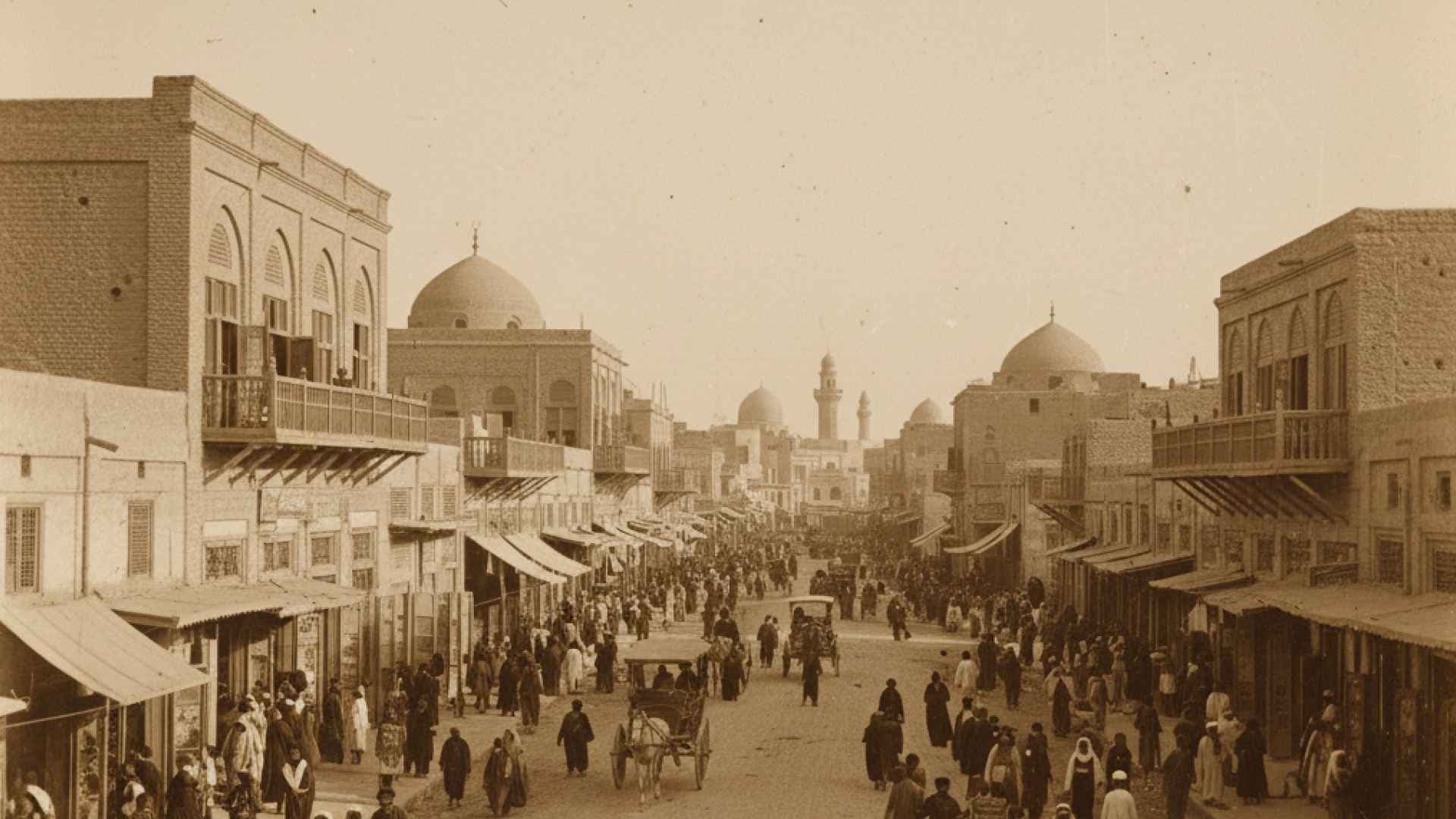

The Abbasid Caliphate was among the strongest and most culturally diverse empires of Islamic history. It did not just replace the Umayyads, but transformed political power, cultural identity and dissemination of knowledge in a wide and diverse world. Its rise was driven by revolution and vision, while its peak reflected remarkable achievements in science, literature, and governance. However, due to time and a changing environment, the internal struggles and rising external pressures gradually diminished its power.
What Sparked the Rise of the Abbasid Caliphate in the Islamic World?
The Abbasid Caliphate came to power due to the dissatisfaction of the majority of the people with the Umayyad rulers. The Umayyads had grown the empire within a short period and their treatment of the non-Arab Muslims was not fair, leading to frustration and anger. The Umayyads were also accused by religious groups of paying more attention to power than to Islamic values. The Abbasids took advantage of this dissatisfaction and posed as leaders who could bring back fairness, unity, and powerful Islamic leadership throughout the empire.
Why People Supported the Abbasids
- Promise of Equality: They were to treat all Muslims equally regardless of their background which gained approval among those who felt neglected or mistreated.
- Religious Legitimacy: Being from the family of Prophet Muhammad gave them respect and trust among people who valued religious leadership.
- Eastern Power Base: Support from Khurasan gave them soldiers and a strong position to challenge the Umayyads.
- Organized Movement: The Abbasids carefully planned their rise, with secret networks and coordinated actions that made their movement strong and effective.
This mix of fairness, religious trust, strong support, and careful planning helped the Abbasids take control and establish their rule.
The Abbasid Revolution and the Fall of the Umayyads
The Abbasid Revolution was fast and decisive, marking a major change in power, leadership, and ideas across the Islamic world. Abbasid forces led by Abu Muslim soon gained momentum as various groups were united through a common cause. The Battle of the Zab was the turning point as the last Umayyad caliph was defeated. After their victory, the Abbasids moved quickly to eliminate rivals and establish firm control, securing their place as the new rulers.
The revolution was successful through the blend of good leadership, mass support, good vision, and planning. The military leadership of such commanders as Abu Muslim was well organized and led, and popular support of various communities supported the movement. The Abbasids provided more than a shifted ruler as they were to bring a novel social and political order. Their successes were quick and decisive, due to strategic coordination and speed of action, the Umayyad dynasty collapsed in the East and Abbasid rule emerged.
How Baghdad Became the Political and Cultural Heart of the Empire
After securing power, the Abbasids built a new capital in 762 CE under Caliph Al-Mansur. Baghdad quickly became the center of the empire, linking the East and West and allowing trade, ideas, and culture to flow freely. The city reflected the Abbasid vision of power, knowledge, and connection.
- The trade routes also brought about wealth, commodities and resources which assisted the city to expand quickly and become wealthy economically.
- Institutions such as the House of Wisdom attracted scholars, scientists and thinkers worldwide.
- Arabs, Persians, Turks and other peoples also formed a rich and multicoloured cultural atmosphere.
- The seat of government where decisions were made and the Abbasids were running the empire well.
- Baghdad soon grew into one of the greatest cities of the medieval world, symbolizing the ambition, knowledge, and strength of the Abbasids.
To explore how this legacy began, read our blog on The Mesopotamian Heritage: How Iraq Shaped World Civilization.
The Golden Age: Advances in Science, Trade, and Education
The Abbasid period is called the Golden Age because it was a time of extraordinary growth in knowledge, culture, and global connections. Scholars not only preserved learning from Greek, Persian, and Indian sources but also expanded it, creating discoveries that influenced science, mathematics, medicine, and literature for centuries.

Science and Medicine
Physicians and researchers made breakthroughs in anatomy, diagnosis, and treatments. Hospitals became more organised, specialized, and widely accessible, turning medical care into a structured science rather than just practice.
Mathematics and Innovation
Mathematicians developed algebra, refined numerical systems, and improved geometry and astronomy. These innovations revolutionized scientific thinking, navigation, engineering, and everyday problem-solving.
Trade and Global Reach
The Abbasid Empire became a central hub connecting Asia, Africa, and Europe. Trade routes carried goods, technologies, ideas, and cultural influences, making cities like Baghdad and Basra major centers of commerce and exchange.
Education and Literature
Learning flourished in schools, libraries, and institutions like the House of Wisdom. Scholars wrote books, translated texts, and explored philosophy, while poetry, literature, and storytelling reflected both intellectual depth and rich cultural life.
This Golden Age demonstrates how knowledge, curiosity, and openness to new ideas can drive a civilization to unprecedented achievements and lasting influence.
What events gradually weakened the Abbasid Authority?
Despite its achievements, the Abbasid Caliphate gradually lost its strength. Over time, governing the vast empire became increasingly difficult, and internal divisions and conflicts began to weaken central authority. Local rulers acted independently, power struggles distracted the leadership, and external pressures added to the empire’s challenges.
- Provinces broke away, forming semi-independent or fully independent dynasties, reducing the caliph’s control.
- Rivalries and disputes within the ruling family and elite weakened leadership and disrupted decision-making.
- Reliance on foreign troops gave generals and mercenaries more real power than the caliph, lessening his authority.
- Declining trade, mismanagement, and corruption reduced wealth and financial stability.
- Repeated invasions, most notably by the Mongols, challenged the empire and contributed to its collapse.
Conclusion
The Abbasid Caliphate stands as one of history’s most remarkable empires, celebrated for its lasting contributions to culture, science, trade, and governance. From its powerful rise to its golden age and eventual decline, its story reflects how vision, knowledge, and innovation can shape an entire civilization. Visiting the historic sites of this era offers a unique opportunity to connect with this rich legacy. If you’re planning to travel to Iraq and explore these iconic destinations, Zaair offers complete visa, travel, and accommodation services to ensure a seamless and memorable experience.
FAQs
What was the Abbasid Caliphate?
One of the greatest Islamic kingdoms that followed the Umayyads was the Abbasid Caliphate. It has intellectual, cultural, and economic accomplishments, and was instrumental in influencing the Islamic world.
How did the Abbasid Caliphate rise to power?
Abbasids came to power due to social, political and religious favor. They took advantage of the discontents with the Umayyads, stating that they would be equal to non-Arab Muslims and their affiliation to the family of the Prophet Muhammad.
Why is Baghdad significant in Abbasid history?
The city of Baghdad was established by Caliph Al Mansur and became the center of the empire in political, economic, and cultural life. The House of Wisdom was based in Baghdad, and this was a source of science, learning and intellectual dialogue.
What were the major achievements of the Abbasid Golden Age?
The Golden Age was a period of development in science, medicine, mathematics, astronomy, literature and trade. Through translation and the exposure of knowledge available in Greek, Persian, and Indian sources, scholars have shaped civilizations around the world.
Why did the Abbasid Caliphate decline?
This was caused by internal disunity, political instability, dependence on foreign armies, economic difficulties and external invasion, the most outstanding being the Mongol conquest of Baghdad
Can I visit historic sites related to the Abbasid Caliphate today?
Yes! Many historic sites, especially in Iraq and the surrounding regions, reflect the legacy of the Abbasid era. Travel services like Zaair can help with visas, flight booking, accommodations, and guided tours to explore these incredible landmarks safely and conveniently.