
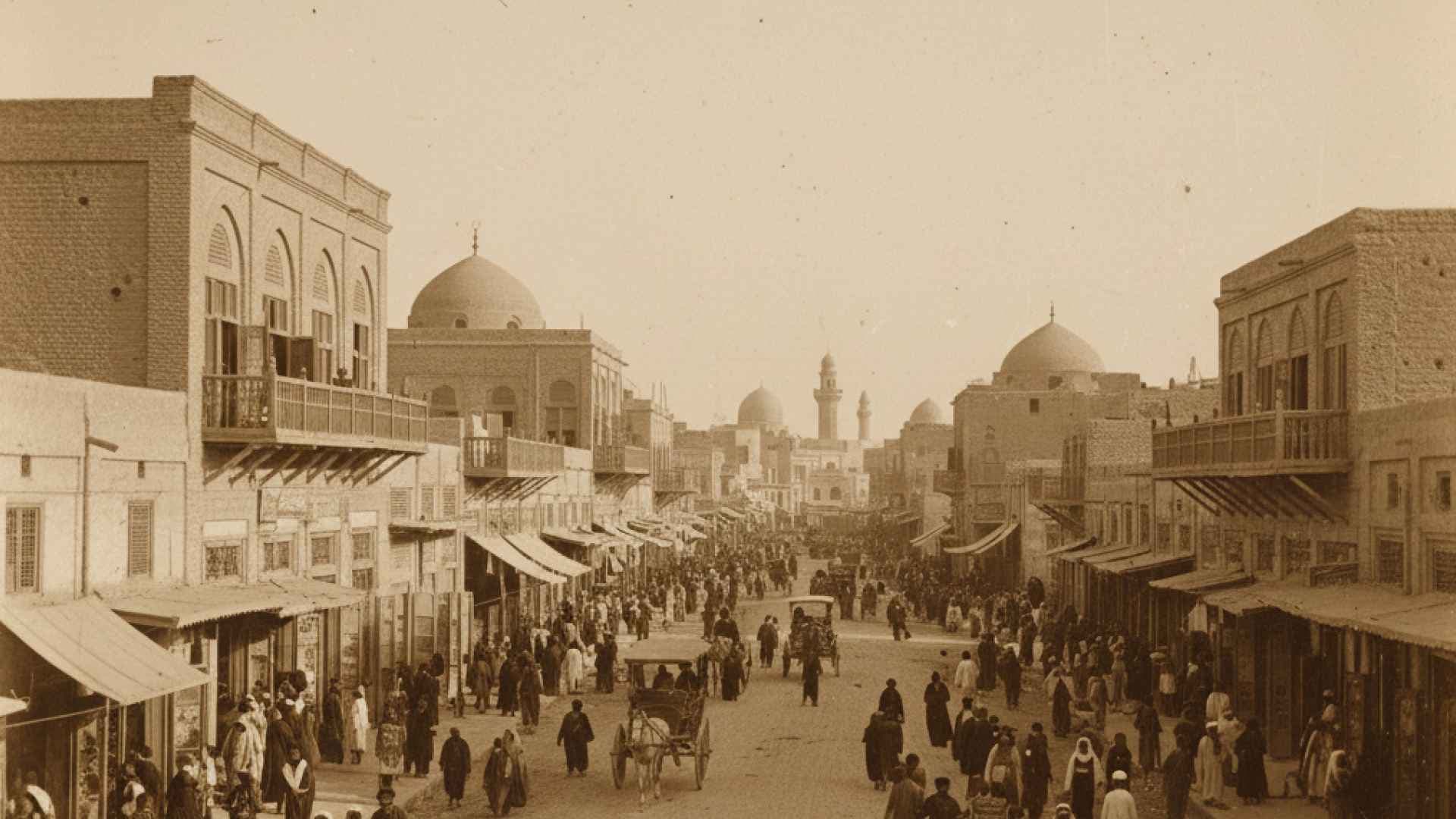

Human civilization took its earliest and most influential steps in Mesopotamia, a historic region that spans modern-day Iraq. This was a time when writing was invented, laws were made, and organized governments were set up. More than just an early settlement, Mesopotamia served as a center of experimentation where societies learned how to cooperate, manage resources, and preserve knowledge. The ideas developed here shaped science, law, administration, and social structure. Most of the pillars of the modern world have their origins in this area, and Mesopotamia is one of the pillars of human development and a timeless example of the common origin of humankind.
Why Is Mesopotamia Called the Cradle of Civilization?
Mesopotamia is the Cradle of Civilization since it is the first place in human history where small groups of nomadic people started to turn into an organized urban population. As individuals started to settle down, they were able to learn how to grow crops, form stable communities and come up with villages which grew to cities. This shift altered the way humans lived, labored and communicated with each other and this became the basis of intricate social existence. It was the moment when cooperation replaced survival as the central goal of communities.
One thing that was unique about Mesopotamia was the development of order systems that extended beyond survival. Cities had government, trade, religion, and social roles. People were ahead of their time, they set rules and they had a common culture. These early systems introduced ideas that continue to shape civilization today, making Mesopotamia humanity’s first successful model of organized society. Its influence can still be seen in modern laws, economies, and cultural traditions.
Geography and the Rivers That Shaped Civilization
The history of Mesopotamia was closely connected with its geography. The area was situated between the great rivers, Tigris and Euphrates which contributed fertile soil enhanced by seasonal floods that formed the best conditions for agricultural activities. This richness of resources allowed communities to produce extra food, fueling population growth, city expansion, and the rise of specialized professions. At the same time, the rivers were volatile and could bring disastrous floods. The Mesopotamians were capable of managing water flow to succeed by canals, levees and reservoirs, which made innovation, strategic planning and collaboration, which were core competencies that were used to mold one of the oldest civilizations in the world.
Life Between Two Great Rivers
The connection between the Tigris and Euphrates determined the everyday life, government and culture. Communities adjust to both the benefits and challenges of the rivers, creating systems that balance human needs with natural forces. This connection to the environment made it central to Mesopotamian society and remains one of the main reasons that the region became a cradle of civilization. For history enthusiasts, travelling in Iraq offers the unique opportunity to witness these ancient river systems, visit the ruins of early cities, and experience firsthand the landscapes that shaped early human civilization.
The Power of Writing in Shaping Mesopotamian Society
Writing was one of Mesopotamia’s most transformative innovations. It was much more than just record-keeping, as it allowed people to structure society, store knowledge, and exchange ideas among generations. This helped establish organized rule, culture, and the beginnings of civilization.
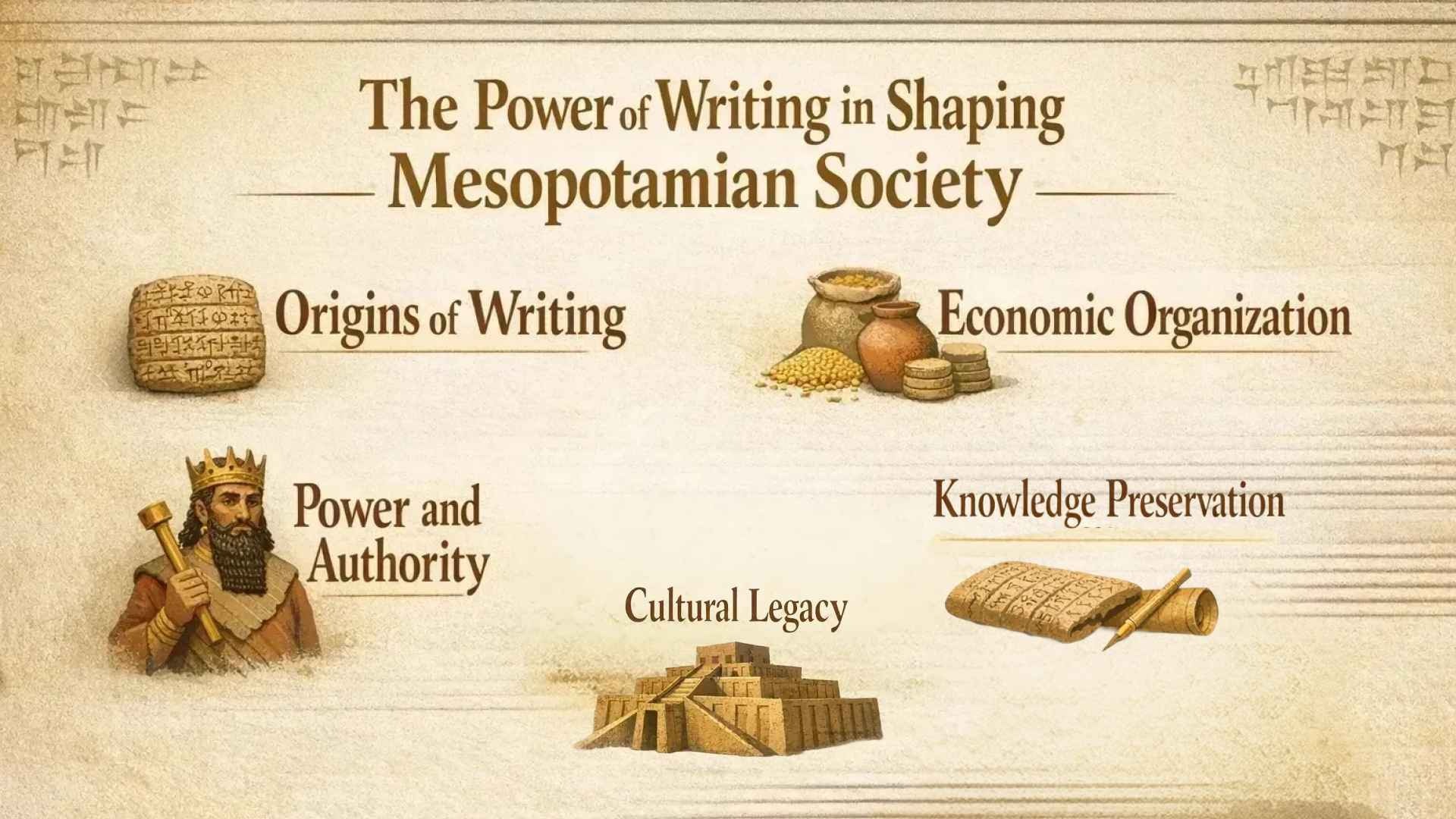
- Origins of Writing: Writing began as simple marks to track trade and inventory and gradually developed into a structured script, allowing information to be permanently recorded and shared widely.
- Economic Organization: With writing, communities could accurately document trade, property ownership, taxes, and resource management, creating stability and fairness in economic and legal systems.
- Power and Authority: Kings and rulers used written inscriptions to assert their authority, issue decrees, and maintain control, shaping the political structure of early cities.
- Knowledge Preservation: Priests, scholars, and scribes recorded religious rituals, scientific discoveries, medicine, mathematics, and astronomy, ensuring that knowledge could be learned and built upon over generations.
- Cultural Legacy: Writing made history possible by preserving human experiences, stories, and achievements, allowing future generations to study, learn from, and celebrate the past.
If you’re thinking about visiting Iraq, don’t miss our detailed blog on What’s the Best Iraq Tour Itinerary for the Coming Years.
How Did Mesopotamians Measure Time and Space?
Mesopotamians carefully studied time and space to organize everyday life and work. Their calendars, numbers, and sky observations helped predict seasons and events. These ideas became the base for math, science, and engineering.
- Developed a base-60 numerical system, influencing modern time (60 seconds/minute, 60 minutes/hour) and geometry (360° in a circle).
- Created calendars to organize agriculture, religious events, and civic duties.
- Made astronomical observations to predict seasons and celestial events.
- Brought structure to daily life by measuring time and space.
- Laid the foundation for mathematics, astronomy, and engineering in later civilizations.
Agriculture and Irrigation Systems
Mesopotamians developed advanced farming techniques and irrigation to feed growing populations and support cities. Their work transformed land, society, and trade.
- Agriculture was the backbone of society, sustaining food supply and economic stability.
- Built irrigation networks with canals and ditches to redirect river water to fields.
- Systems ensured crops flourished even during dry periods, supporting surplus harvests.
- Surplus enabled urban growth and long-distance trade, connecting Mesopotamia to other regions.
- Farming reshaped society, land ownership, labor systems, and taxation emerged, showing humans could control nature.
Advances in Science and Medicine
Mesopotamians observed the natural world, documenting patterns in stars, planets, and human health. Their methods laid the groundwork for modern science.
- Studied stars, planetary movements, and recorded mathematical calculations with accuracy.
- In medicine, identified symptoms, classified illnesses, and prescribed treatments using plants, minerals, and practical methods.
- Practices combined observation with spiritual beliefs but showed early diagnostic reasoning.
- Illness and natural events were studied and understood, not just seen as mystical.
- These efforts became the foundation for scientific inquiry in later civilizations.
Political Structures of Mesopotamia and Their Influence on Later Governments
The impact of Mesopotamia on political thought was immense and long-lasting. The early city-states had centralized power with the help of administrators, legal officials, and the military, and an orderly system of governance was created in which decisions were systemic and enforceable. Among their greatest contributions was the invention of written law which was publicly documented to present the rights, duties and consequences of an act so that the leadership was not arbitrary and inconsistent with the law but was fair, transparent and predictable.
These political innovations formed the foundation of the progress of future governments and had an impact on the development of the political systems over the era. Concepts like codified laws, organized state power, effective government, and accountability influenced subsequent empires and remain applicable to modern governments and governance, and also serve as a reminder of how Mesopotamian traditions established the eternal standards of order, justice, and stability in society.
Conclusion
Mesopotamia’s influence on human civilization, from writing and governance to agriculture, science, and timekeeping, has left a lasting and remarkable legacy that continues to shape the modern world. Its remarkable innovations show how organized societies can harness knowledge, resources, and creativity to build thriving and resilient communities. If you want to experience the wonders of Mesopotamia up close, Zaair provides full travel, visa, and accommodation services to help you explore the historic sites, cultural heritage, and unique marvels of this captivating region, making traveling in Iraq safe and convenient.
FAQs
Why is Mesopotamia called the Cradle of Civilization?
It was the first region where humans formed cities, agriculture, governance, and culture, laying the foundation for civilization.
How did the Tigris and Euphrates rivers influence Mesopotamia?
They provided fertile soil for farming and growth, while floods inspired irrigation, water management, and urban planning.
What role did writing play in Mesopotamia?
Writing enabled record-keeping, law, trade, and knowledge preservation, shaping society and passing information across generations.
How did the Mesopotamians contribute to science and timekeeping?
They created calendars, a base-60 number system, and astronomical observations, influencing math, time, and engineering.
What is the lasting impact of Mesopotamian governance?
They introduced written laws and organized leadership, setting the standard for fair, transparent, and accountable governments.