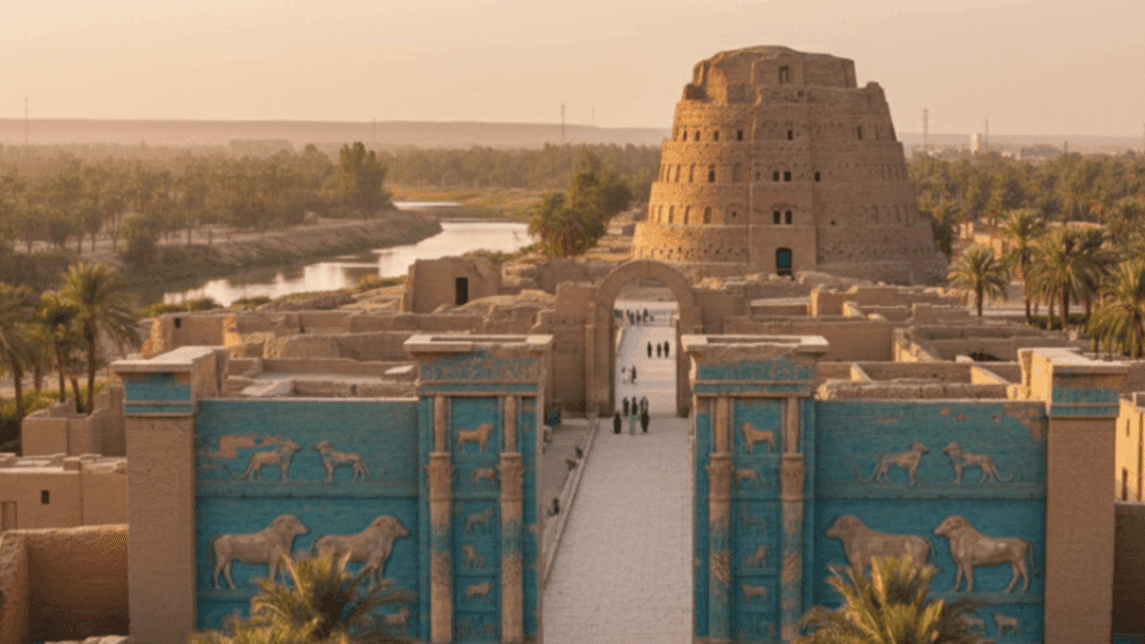
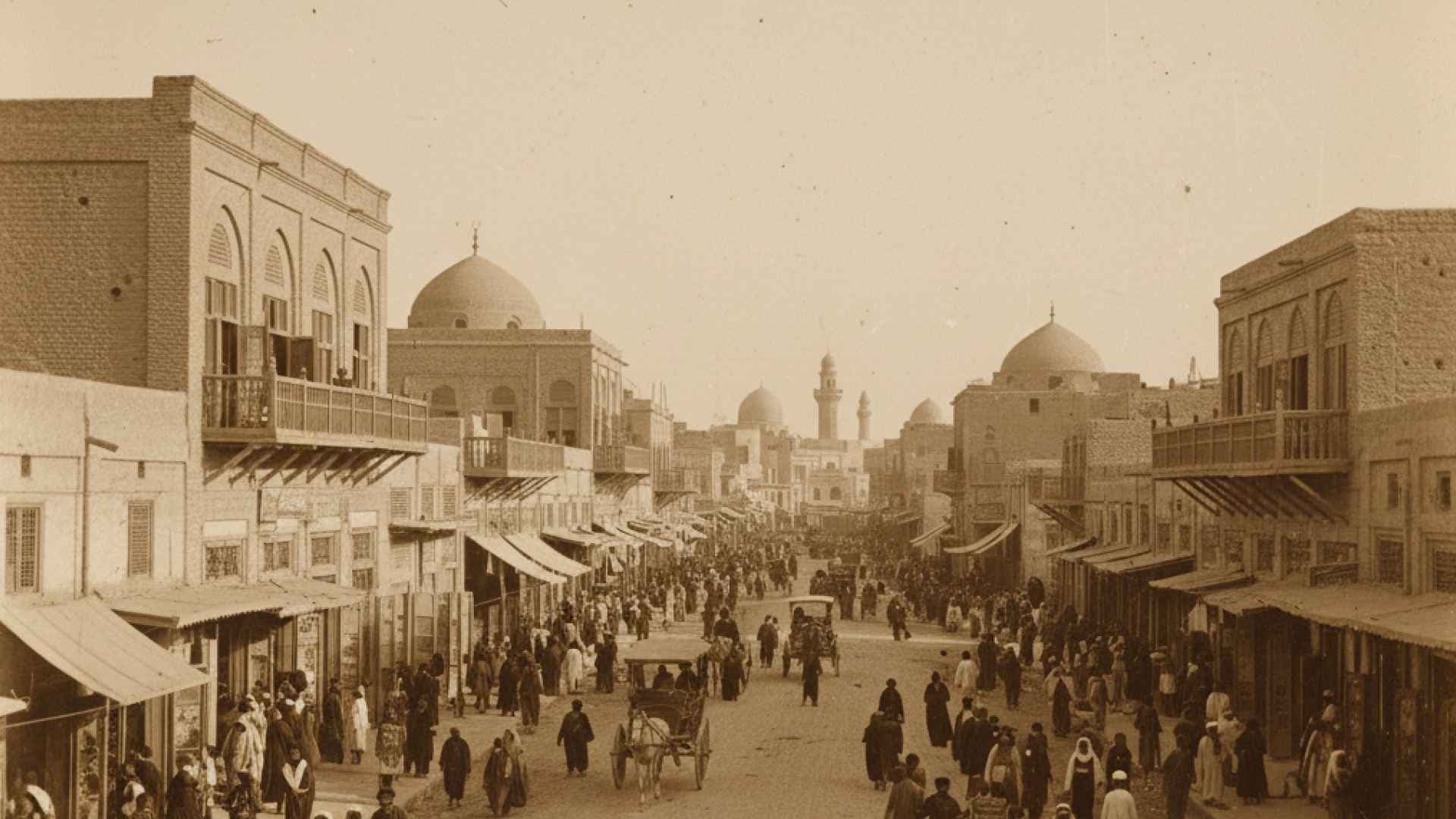

Ancient Mesopotamia, located between the rivers Euphrates and Tigris, is the place where some of the greatest archaeological riches of mankind are preserved. Ur and Nimrud are among those that have a rich history and cultural importance. These locations show the strength, religion, art, and creativity of the ancient civilizations in the form of grand palaces, holy temples, detailed sculptures, and urban inventions. Ur reveals the routine and spirituality, whereas Nimrud demonstrates the Assyrian ambition towards the empire and mastery of art. The ancient cities being studied and preserved today enable us to relate to their rich heritage and offer lessons about the roots of human culture.
What Are the Most Famous Discoveries in Ancient Ur
Ur, near modern Nasiriyah in southern Iraq, was a thriving Sumerian city over 4,000 years ago, especially during the Third Dynasty of Ur (c. 2112–2004 BCE). Its ruins reveal remarkable culture, architecture, and daily life.
The Great Ziggurat of Ur
A massive stepped temple dedicated to Nanna, the moon god, with three mudbrick platforms, showing both spiritual devotion and architectural skill.
Royal Tombs and Treasures
Among the tombs, gold, lapis lazuli, jewels, and the Standard of Ur showcasing the elite power and the Sumerian artistry were discovered by Sir Leonard Woolley.
Everyday Objects and Records
Pottery, tools, and thousands of cuneiform tablets reveal life, trade, law, and governance in ancient Ur.
Musical Instruments
Ancient lyres inlaid with gold and shell show music’s role in rituals and entertainment.
How Did Nimrud Become a Center of Assyrian Power
Nimrud, also known as Kalhu, became the center of political and cultural life in the Assyrian kingdom. Its strategic location along key trade routes helped the city thrive economically, while its grand palaces and temples demonstrated the power and influence of the empire.
- The royal palaces featured massive walls, grand halls, and intricate reliefs, serving as administrative centers and powerful symbols of Assyrian authority.
- Its streets, temples and administration buildings demonstrate the high urban planning regarding both the practicality of civic needs and the spectacular imperial glory.
- Nimrud functioned as a center for governance and military campaigns, reinforcing its role as a symbol of Assyrian dominance and influence.
- Artistic achievements, including detailed stone carvings and monumental sculptures, demonstrated the empire’s cultural sophistication and left a lasting legacy in Mesopotamian art.
Through its combination of political strategy, military strength, architectural innovation, and artistic excellence, Nimrud became a cornerstone of Assyrian power and one of the most remarkable cities of the ancient world.
How Religious Practices Shaped Life in Ancient Ur
Religion in Ur played a central role in shaping society, influencing almost every aspect of life, including governance, social traditions, and daily family activities. Temples were not only a center of spiritual life, but were also an economic and administrative center, managing lands, labor, and trade.
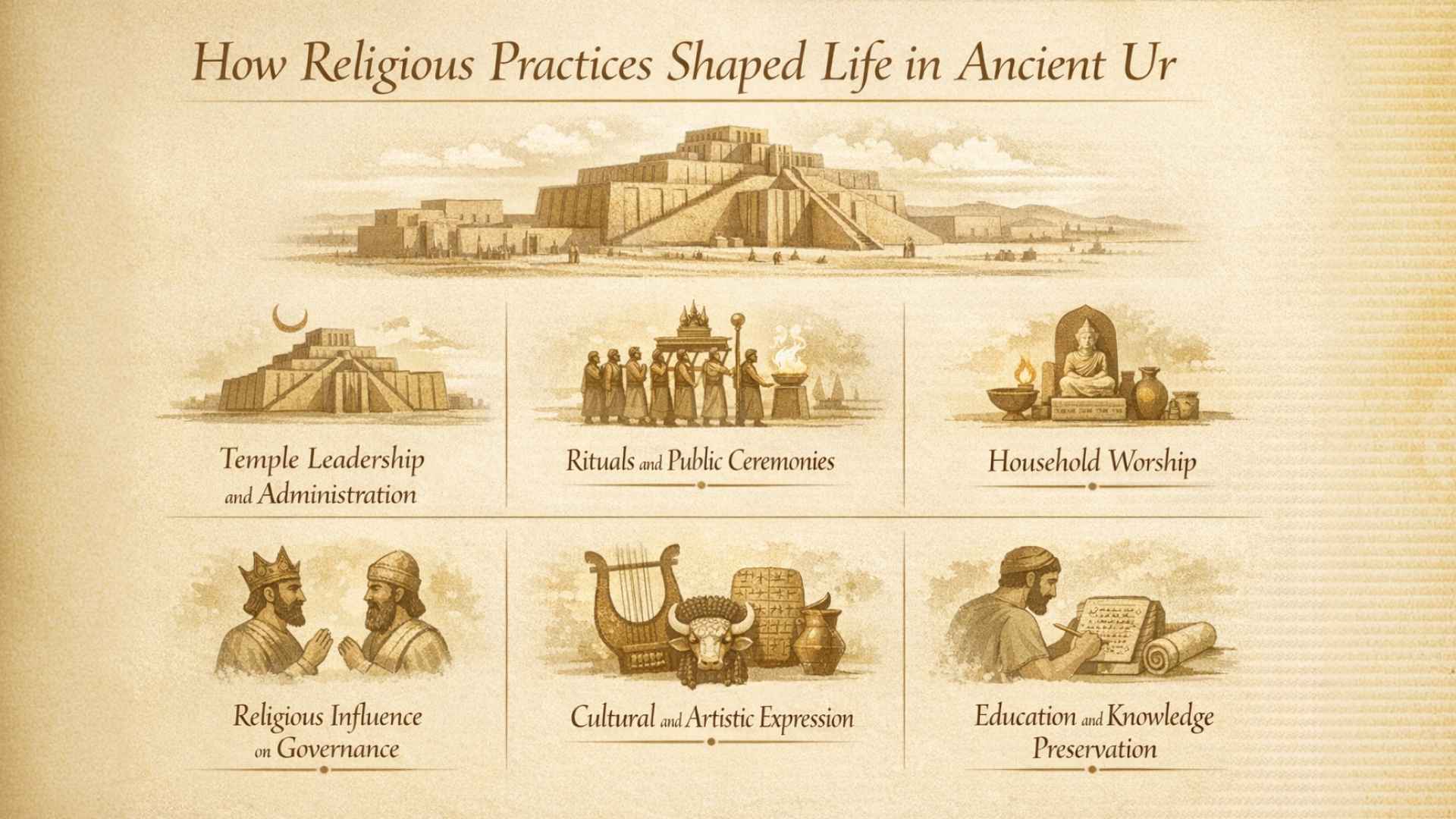
Temple Leadership and Administration
Priests were powerful and had control over the estate of temples, controlling workers, conducting trade and economic practices as well as combining spiritual power with civil leadership in order to lead the affairs of the city.
Rituals and Public Ceremonies
Festivals, offerings in large-scale, and community rites united people, supported spiritual worship, and the community connection, as well as the celebration of the divine order in daily living.
Household Worship
Personal prayer was part of everyday routine and was manifested in domestic shrines, small votive offerings, prayers, and family rites which united people with the gods and strengthened moral and social principles.
Religious Influence on Governance
City leadership and major decisions were often shaped by divine guidance, oracles, and priestly counsel, demonstrating how religious belief directly influenced politics, law, and public administration.
Cultural and Artistic Expression
Religion inspired a wide range of creative expression, including intricate art, monumental architecture, music, and literature, leaving a lasting cultural legacy that reflected both spiritual and social values.
Education and Knowledge Preservation
Temples served as centers of learning, where scribes recorded religious texts, economic transactions, and historical events, thereby preserving knowledge and reinforcing the connection between faith and scholarship.
Why Sculptures and Reliefs in Nimrud Continue to Fascinate
Nimrud is celebrated for its remarkable artistic achievements, which combined technical skill with deep symbolic meaning. Sculptures and reliefs served multiple purposes as tools of propaganda, expressions of religious devotion, and vivid storytelling. Colossal Lamassu guardians, winged bulls with human faces, stood at palace entrances to symbolize divine protection and royal authority, their immense scale and intricate detail still captivating modern viewers. Wall reliefs depicting battles, royal hunts, and religious ceremonies offer a window into Assyrian life, ideology, and artistic mastery, preserving moments of power and ritual for posterity.
Moreover, finely crafted ivory carvings reflect the luxury, craftsmanship, and aesthetic sophistication of Nimrud’s elite, highlighting the city’s cultural refinement. Together, these artistic achievements demonstrate how the Assyrians used visual culture not only to assert political and religious authority but also to express identity, values, and social hierarchy, leaving a lasting legacy that continues to fascinate historians and art lovers alike.
If you’re interested in Iraq’s journey toward rebuilding and modernization, explore our blog on What Are the Key Aspects of Iraq’s Post-War Reconstruction and Urban Development?
How Life in Ur and Nimrud Reflected Ambition and Culture
Both cities reflect the ambitions of their people through urban design, art, and governance. In Ur, this is seen in monumental temples, organized administration, and a thriving economy. In Nimrud, it appears in territorial expansion, planned streets and palaces, and remarkable artistic achievements.
- Both cities used rivers and trade routes to build wealth, expand influence, and connect with distant regions.
- The use of clay tablets, records, and administrative documents highlights a strong commitment to literacy, law, and the preservation of knowledge.
- Artistic and cultural objects indicate interaction with neighboring regions, reflecting openness to new ideas while maintaining local traditions.
- Architecture, public spaces, and monumental works served as symbols of civic pride, political power, and collective identity.
How Archaeologists Preserve the Treasures of These Ancient Cities
Protecting the ancient cities of Ur and Nimrud is important for keeping their history and knowledge alive. Archaeologists use careful methods to safeguard fragile buildings and objects from decay, theft, and damage caused by weather or time.
- Excavations are done carefully, with detailed notes and minimal disturbance, so the history of each site is preserved.
- Fragile items like pottery, reliefs, and sculptures are protected using special treatments, controlled environments, and safe storage to prevent deterioration.
- Digital tools such as 3D scanning, photography, and mapping allow researchers to study and share artifacts without risking harm to the originals.
- Working closely with local communities helps protect the sites, teaches people about their heritage, and encourages long-term care.
These efforts let us explore and learn from Ur and Nimrud today while keeping their treasures safe for future generations.
Conclusion
Exploring Ur and Nimrud offers a glimpse into the creativity, ambition, and daily life of ancient Mesopotamia. From the towering ziggurats of Ur to Nimrud’s grand palaces and Lamassu guardians, these cities showcase remarkable architecture, art, and governance. If you want to visit these historic treasures, travel to Iraq with Zaair, which can assist with flights, visas, and accommodations, making your journey simple and convenient. By preserving and studying these sites, archaeologists allow us to connect with the legacy of early civilizations.
FAQs
Where are Ur and Nimrud located?
Ur lies close to the modern day south Iraqian city of Nasiriyah, and Nimrud, also known as Kalhu, in northern Iraq. They were both large contributors to the ancient Middle Eastern Mesopotamian civilization.
Why are Ur and Nimrud considered important archaeological sites?
Through the cities, one can discover the political, religious and artistic accomplishments of early civilizations such as monumental architecture, sculptures and minute documents of life in the past.
What are the most famous discoveries at Ur and Nimrud?
At Ur, it is represented by the Great Ziggurat, royal tombs, and cuneiform tablets. Nimrud is characterized by palaces, Lamassu guardians, wall reliefs and ivory carvings.
How are these sites preserved today?
Archaeologists use careful excavation, conservation treatments, digital mapping, and community collaboration to protect buildings, artifacts, and cultural heritage.
Can tourists visit Ur and Nimrud?
Yes, one can go to both of these places but traveling is sometimes difficult as per local laws and safety. It is advisable to check and book guided tours or official permission before visiting.