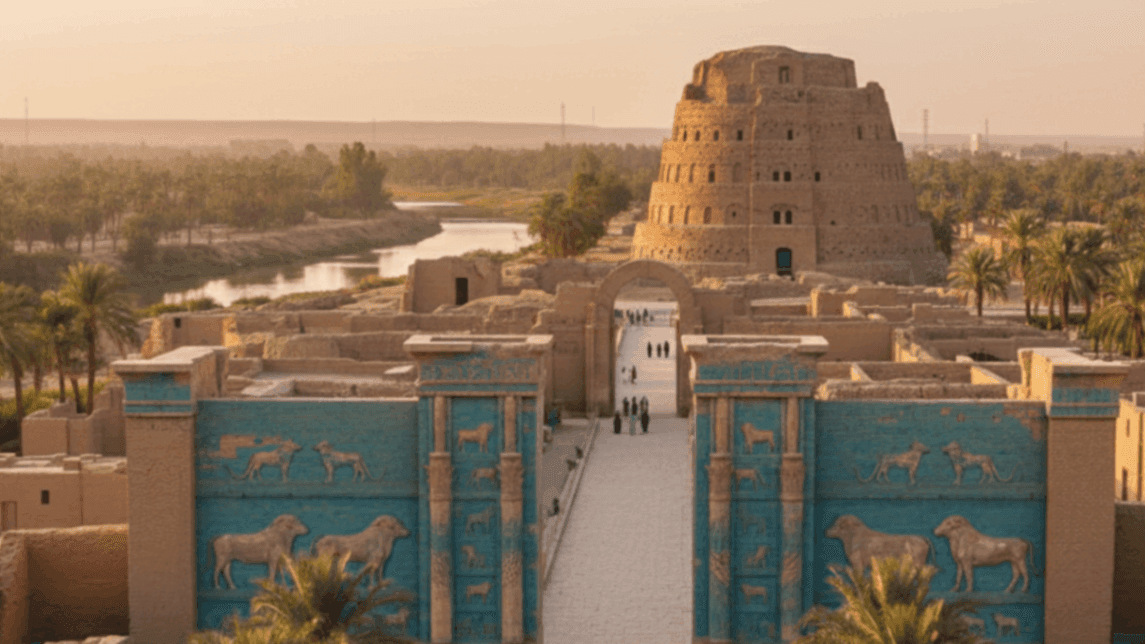
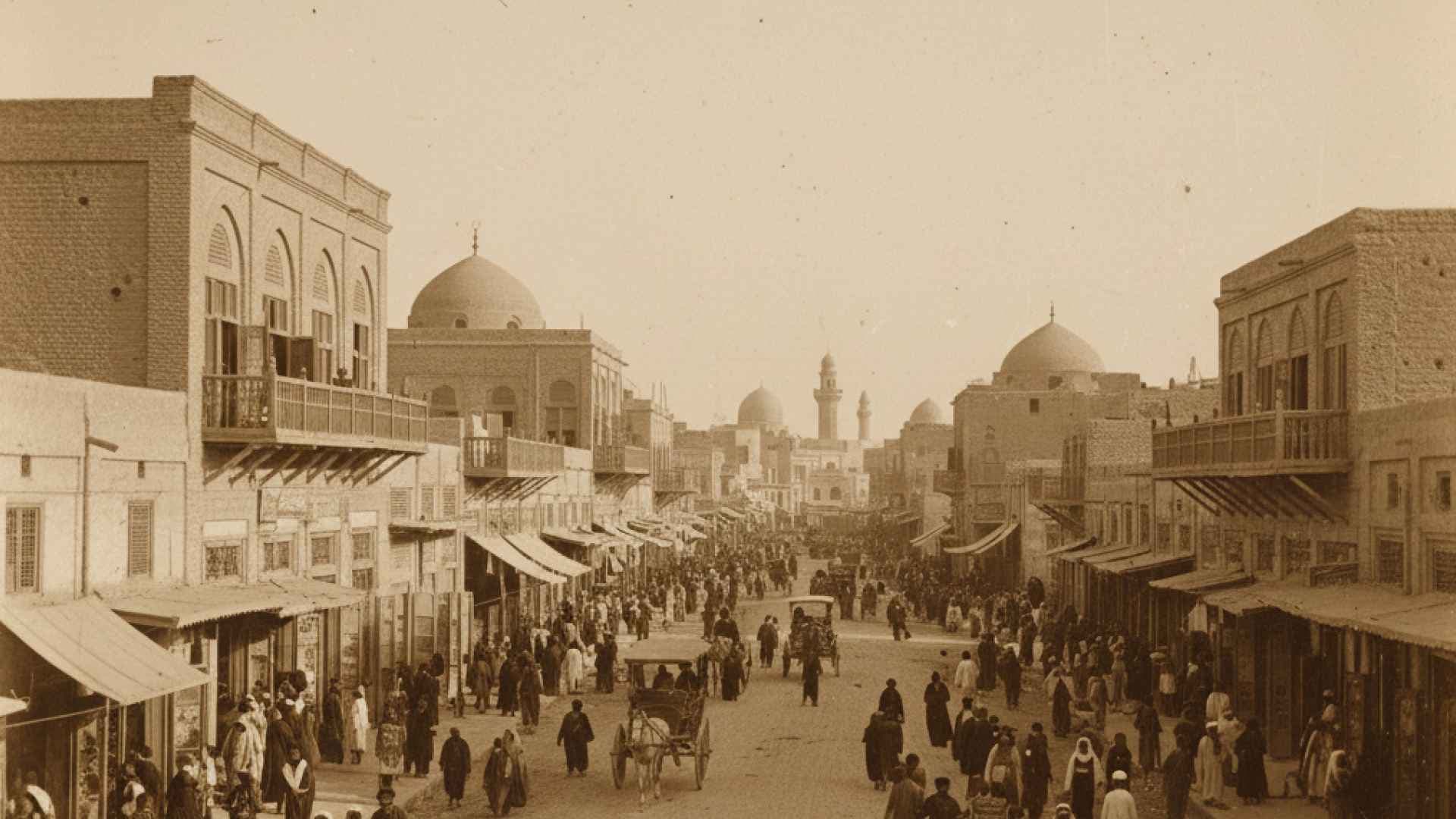

Think of the moment of being in a lonely plain in central Iraq, where one incident occurred 1,300 years ago and altered the history of Islam. A spot where martyrdom became a symbol, sorrow became a shared memory and religion became a pilgrimage to which millions of people come annually. That place is Karbala, more than a mere dot on the map, Karbala can be heard echoing across centuries as the setting of one of the greatest tragedies and turning points in Islamic and especially Shi'ite history. Whether you approach it as a pilgrim, historian, or curious traveler, the city’s legacy reaches far beyond its dusty streets. That’s why Karbala should be regarded as one of the most significant historical places in Iraq.
Historical Significance
The Battle of Karbala
At the heart of Karbala’s historic importance lies the Battle of Karbala fought on October 10, 680 CE (10 Muharram, 61 AH), when Husayn ibn Ali, grandson of the Prophet Muhammad, along with a small group of companions and family, was massacred by forces of the then‑ruling Umayyad Caliphate led by Yazid.
Despite being heavily outnumbered, Husayn had only about 70 followers and family members. He refused to pledge allegiance to what he regarded as a corrupt regime, standing instead for justice, truth, and moral integrity. The result was tragic, nearly everyone on Husayn’s side was killed, including infants and the elderly, and their bodies were desecrated, a gruesome act that shocked the early Muslim community and beyond. From that martyrdom sprang a narrative of resistance, sacrifice, and dignity against tyranny that has reverberated through Islamic history. For many, Karbala is not just a tragedy, it is a moral watershed.
Birthplace of a Movement of Memory
In the aftermath of the battle, those who survived most notably women and children, carried the story across lands, ensuring that the memory of what happened in Karbala never faded. Within a few decades, pilgrimages to the site began. Indeed, some early pilgrims reportedly visited as early as 685 CE (4 years after the battle). Over centuries, the modest burial ground and shrine transformed into a city built around remembrance, its identity forever shaped by what happened on that desert plain.
Religious and Spiritual Importance
Karbala holds deep religious and spiritual meaning for Muslims, especially Shiʿite communities worldwide. It is a city where faith, sacrifice, and remembrance are woven into daily life, making it one of the most spiritually powerful places in Iraq.
Shrines of Sacred Legacy
Today, Karbala is home to some of the most revered shrines in Shiʿite Islam. The burial site of Husayn ibn Ali, the Imam Husayn Shrine stands at the city’s heart. Nearby lies the shrine of Abbas ibn Ali, known as Al-Abbas Shrine a figure revered for his loyalty and sacrifice during the Battle of Karbala. These shrines are not merely monuments they are living centers of faith, history, and identity. Millions of pilgrims visit annually, turning Karbala into a vibrant spiritual hub.
For a deeper look at Karbala’s must-visit sites, explore [Which Hidden Gems and Historic Landmarks Should You Visit in Karbala] to discover its hidden gems and historic landmarks.
A Life of Learning, Reflection, and Culture
Beyond shrines, Karbala has grown into a significant center of Islamic learning. Institutions like AhlulBayt University and University of Karbala attract students studying religious sciences, law, medicine, and more combining spiritual heritage with academic rigour. Thus, the city is equally important as a center for scholarship, debate, and cultural exchange, preserving traditions, nurturing new generations, and keeping alive the values born out of its painful yet profound past.
Karbala’s Turbulent History: Conflict, Resilience and Renewal
Karbala’s history is marked by repeated conflict and destruction, followed by renewal that reflects the city’s enduring religious and cultural significance.
Repeated Destruction and Rebuilding
Because of its religious significance, Karbala has often been a target. For example, in 1802, forces from what is now central Saudi Arabia attacked and sacked the city, destroying the shrines and killing thousands. Yet each time, survivors rebuilt, restoring shrines, rebuilding communities, and reestablishing Karbala as a center of pilgrimage and faith.
Modern Challenges and Endurance
In more recent decades, Karbala has faced violence, political turbulence, and attacks, but still remains resilient. Even wars and bombings have not erased the city’s spiritual and historical role. Karbala stands today not just as a memory of past sacrifice, but as a beacon of ongoing faith, hope, and identity.
What Makes Karbala Unique Among Historical Sites
Karbala stands apart from other historical sites because it is not only remembered, it is relived. Its history shapes religious identity, moral values, and collective memory, while its living traditions continue to inspire faith, learning, and resilience across generations.
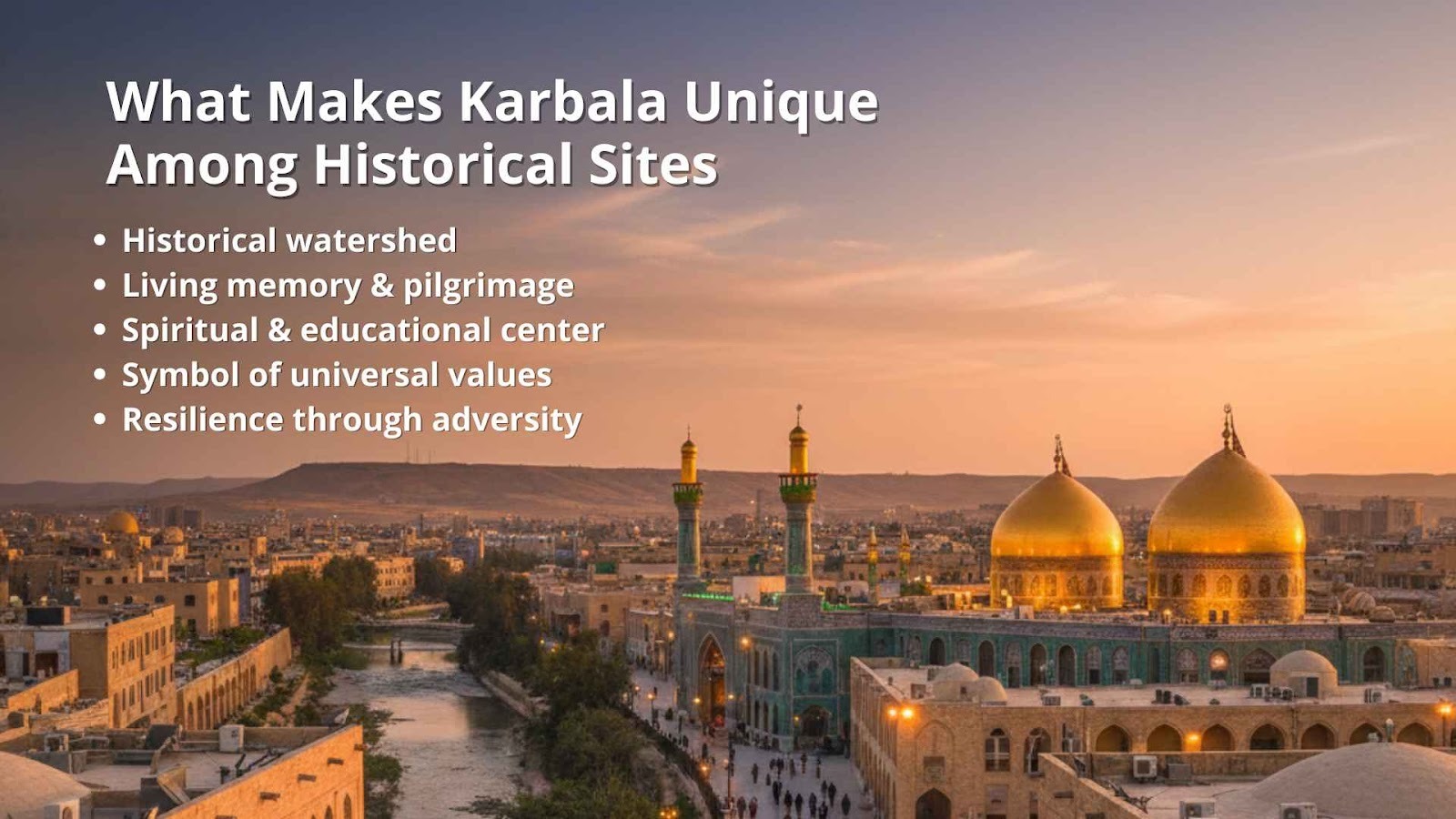
Historical watershed: The martyrdom of Husayn and the formation of the Shia identity are considered to be one of the most significant events in the history of Islam in 680 CE.
Living memory & pilgrimage: Karbala is not a static monument; millions visit annually, keeping the story and spirit alive.
Spiritual & educational center: Combines pilgrimage shrines with institutions of learning in theology, law, medicine, and culture, bridging past and present.
Symbol of universal values: The narrative of sacrifice, justice, and resistance resonates beyond sectarian lines and speaks to universal human ideals.
Resilience through adversity: Karbala has survived numerous attempts of destruction, devastation, and political instability but has been rebuilt and repaired, which speaks of the persistence of religion.
Cultural & Symbolic Impact Across the Muslim World
Karbala’s influence extends far beyond Iraq, shaping culture, literature, and social values across the Muslim world. Its story of sacrifice and justice that continues to inspire generations globally.
A Symbol of Justice, Sacrifice, and Resistance
The story of Karbala transcends sectarian lines. While the battle and its martyrs hold special meaning for Shiʿite Muslims, the themes it evokes, justice vs. tyranny, truth vs. oppression, dignity vs corruption, resonate broadly. Many consider the lessons of Karbala universal. As one modern commentary puts it, Karbala epitomizes the struggle for justice, righteousness, and unwavering faith against tyranny and oppression. These values have inspired countless movements spiritual, social, and political across generations.
Pilgrimage and Global Memory
Each year, millions from Iran, South Asia, Gulf countries, the USA, UK, including Pakistan travel to Karbala. Major events like Arbaeen Pilgrimage (a 40‑day commemoration after the martyrdom) transform the city into one of the largest gathering points on Earth. These pilgrimages are more than religious rituals, they are living commemorations that preserve history, foster solidarity, and reinforce collective memory. The land, the shrines, and the stories all come alive again and again in the minds of believers.
Karbala Through Modern Eyes: Relevance Beyond Iraq
For Muslims in South Asia, including Pakistan, Karbala’s story offers more than history. It serves as a spiritual link, a source of identity, and a powerful reminder of justice and sacrifice. As global events challenge ethics, freedom, and human rights, the lessons of Karbala's dignity in adversity, standing for truth remain deeply relevant. In an era of displacement and migration, people from diverse countries gather in Karbala.
The city’s mosques, shrines, and learning centres become meeting points for a global community, forging bonds beyond borders, language, nationality or ethnicity. Karbala’s legacy has influenced not just religious practice but also literature, poetry, art, and political thought across centuries and continents.
Conclusion
Karbala is not only an ancient historical place. It is also a destination that symbolizes sacrifice, belief, justice, and fighting to defend the good. Millions of people are still affected by the events that occurred here in 680 CE. It is a vibrant city full of pilgrims, learning institutions, and traditions that keep the city and its values alive. There is simply no other location in the world which shares history with the present so strongly and significantly as Karbala. For those who want to visit and understand this sacred city closely, Zaair provides helpful services for Iraq travel, making the journey to Karbala and other holy places easier, safer, and more comfortable.
FAQs
Why is Karbala important in Islamic history?
Karbala is the site of the 680 CE battle where Husayn ibn Ali’s ultimate sacrifice became a symbol of faith, justice, and courage.
What are the main religious sites in Karbala?
The Imam Husayn Shrine and Al-Abbas Shrine are central, attracting millions of pilgrims yearly as powerful symbols of devotion, loyalty, and sacrifice.
Can anyone visit Karbala?
Yes, pilgrims and travelers interested in history, culture, or spirituality can visit to fully experience Karbala’s sacred shrines and rich heritage.
What makes Karbala unique?
Karbala blends historic events, sacred shrines, education, and culture, making it a living city that preserves traditions and deeply inspires reflection.
How can travelers visit Karbala safely?
Travelers can use Zaair, which provides guidance, secure transport, and comfortable accommodations, ensuring a safe, organized, and well-planned journey to Karbala.